
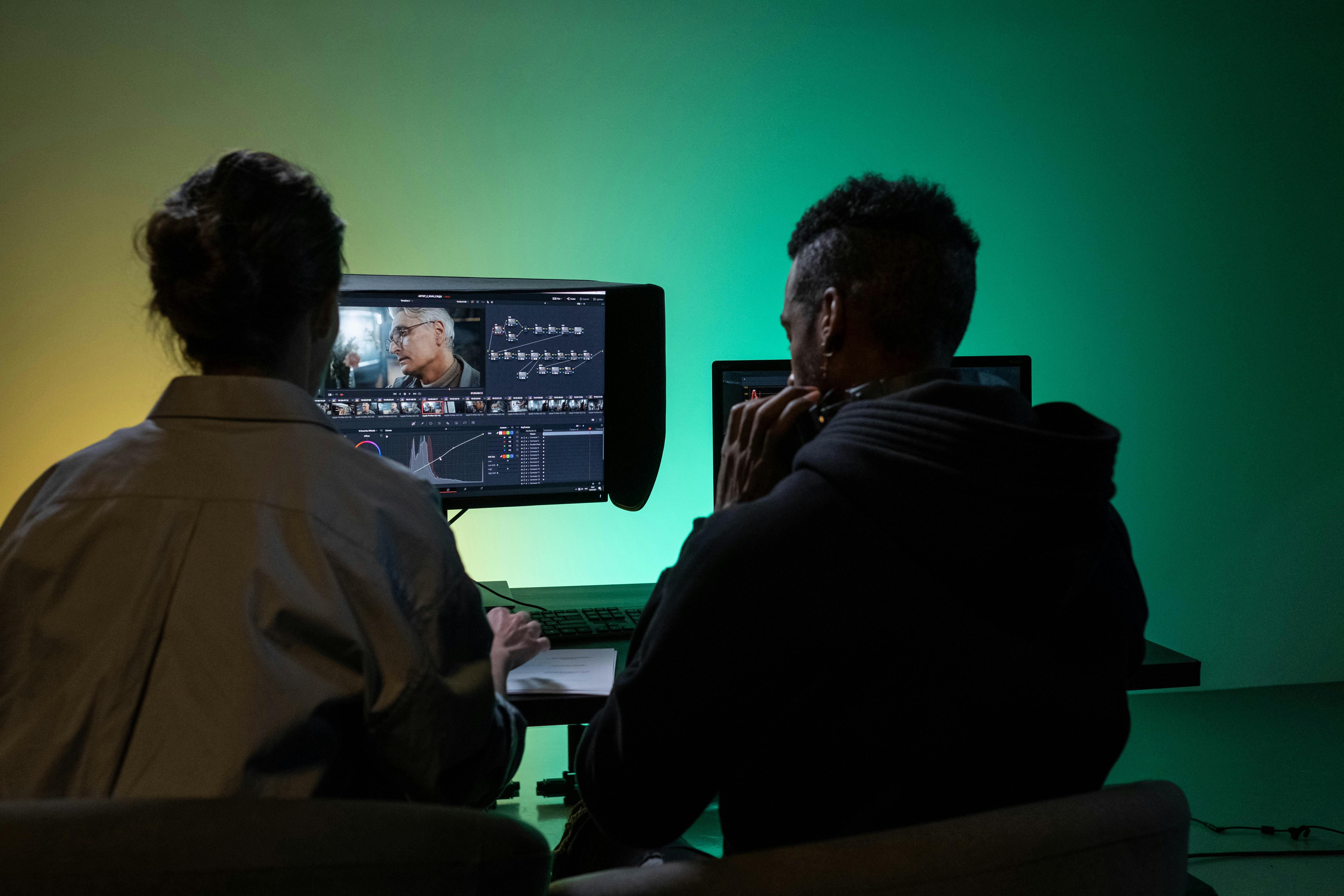
The video editing landscape in 2026 is unrecognizable. Generative AI and machine learning are no longer futuristic concepts but essential tools transforming workflows, boosting efficiency, and unlocking unprecedented creative potential. Discover how AI video editing software is redefining post-production, streamlining content creation, and directly impacting your bottom line. We compare the best AI video editor platforms to help you choose the right solution for maximum ROI and future-proof your career.
Introduction to the AI Revolution in Video Editing
Welcome to 2026, where the once-manual, painstaking process of video editing has been dramatically reshaped by the relentless march of Artificial Intelligence. For years, AI promised to revolutionize creative industries, and now, it has delivered. We're not just talking about minor assists; we're talking about a paradigm shift where AI acts as a co-creator, an intelligent assistant, and a powerful accelerator for every stage of post-production. From initial ingest to final render, AI video editing tools are automating mundane tasks, generating entirely new content, and empowering editors to achieve results previously thought impossible, or at least impossibly time-consuming.
The imperative for content creators, agencies, and production houses alike is clear: embrace AI or be left behind. This isn't just about efficiency; it's about competitive advantage, unlocking new creative frontiers, and ultimately, boosting your bottom line. In this comprehensive guide, we'll dive deep into the current state of AI in video editing, explore expert insights, and critically compare the leading AI-powered platforms on the market today. Your journey to mastering the future of video editing starts here.
Backgrounds & Facts: The Evolution of Intelligent Post-Production
The seeds of AI in video editing were planted over a decade ago with basic features like smart object tracking and automated scene detection. Fast forward to 2026, and those initial applications have blossomed into a sophisticated ecosystem driven by advanced machine learning models, neural networks, and groundbreaking generative AI. The core technologies driving this revolution include:
-
Generative AI (GenAI): This is perhaps the most transformative. Large Language Models (LLMs) and Large Diffusion Models (LDMs) now power text-to-video, image-to-video, and prompt-based content creation. Editors can describe a scene, a visual effect, or even an entire sequence, and the AI generates it – from photorealistic backgrounds to animated characters, object removal, or even stylistic transfers. This dramatically reduces the need for stock footage, complex VFX, and extensive re-shoots.
-
Predictive & Automation AI: Beyond generation, AI excels at automating repetitive tasks. This includes intelligent cut detection, automatic transcription and subtitling (with advanced speaker identification and translation), smart color grading suggestions based on content analysis, audio mastering and noise reduction, and even predictive editing that suggests the next logical cut or transition based on learned patterns from vast datasets of professional edits.
-
Cloud-Native Infrastructure: The computational demands of advanced AI processing necessitate robust cloud infrastructure. Most leading AI video editing platforms now operate largely in the cloud, offering unparalleled scalability, real-time collaboration across geographies, and access to powerful GPUs without requiring expensive local hardware investments.
-
Object Recognition & Semantic Understanding: AI can now understand the content of your video at a deep semantic level. It can identify objects, faces, emotions, actions, and even abstract concepts, making content indexing, search, and intelligent content-aware editing incredibly powerful. Imagine automatically finding every shot with a specific person, a red car, or a sunset – then letting AI assemble a montage.
These advancements collectively mean that editors are spending less time on tedious tasks and more time on high-level creative direction, refining AI outputs, and focusing on the narrative and artistic vision. The speed-to-market for video content has never been faster, and the capacity for personalization and scale is unprecedented.
Expert Opinion / Analysis: The Editor as an AI Conductor
To understand the profound impact of AI, we spoke with Dr. Elara Vance, Chief AI Ethicist and Creative Director at OmniMedia Studios, a leading force in AI-driven content creation. “The notion that AI will replace human editors is fundamentally flawed,” states Dr. Vance. “What we’re witnessing is an evolution of the editorial role. Editors are no longer just cutters; they are now AI conductors, prompt engineers, and creative supervisors. Their skill set is shifting from purely manual dexterity to strategic thinking, critical evaluation of AI outputs, and the ability to articulate complex creative visions to an intelligent machine.”
Dr. Vance emphasizes that the biggest challenge for editors in 2026 isn't learning a new button, but rather learning a new way of thinking. “The editor’s core value – storytelling, pacing, emotional impact – remains paramount. AI liberates them from the drudgery of rotoscoping, keyframing every effect, or manually syncing audio. This freedom allows for more experimentation, faster iterations, and a greater focus on the nuanced art of narrative. We’ve seen a 300% increase in project throughput for our teams who have fully embraced AI workflows, without compromising quality. In fact, creative quality often goes up because editors have more time to refine the core story.”
Ethical considerations are also at the forefront. “Responsible AI use, transparent provenance tracking for AI-generated assets, and ensuring equitable access to these powerful tools are critical,” Dr. Vance adds. “The industry is rapidly developing standards for AI watermarking and content authentication to maintain trust with audiences. Ultimately, AI amplifies human creativity; it doesn't diminish it.” The consensus is clear: proficiency with AI is no longer a niche skill but a fundamental requirement for any serious video professional aiming for maximum CPM and RPM in 2026.
💰 Best Options in Comparison (VERY IMPORTANT)
Choosing the right AI video editing platform is a critical investment that directly impacts your workflow, creative output, and ultimately, your profitability. Here’s a detailed comparison of the top contenders in 2026, each offering unique strengths tailored to different professional needs.
-
1. Adobe Creative Cloud AI Suite (Premiere Pro & After Effects with Project Firefly Integration)
Overview: The industry standard, Adobe's suite has deeply integrated its Project Firefly generative AI capabilities directly into Premiere Pro and After Effects. This offers unparalleled synergy with existing Adobe workflows.
Key AI Capabilities: Generative Fill for video (object removal/addition, background extension), AI-powered audio analysis for automatic ducking and mastering, Smart Reframe for different aspect ratios, advanced object tracking and rotoscoping, AI-driven transcription and captioning, and intelligent color matching.
Target User: Professional studios, agencies, high-end freelancers already entrenched in the Adobe ecosystem, seeking seamless integration and robust generative capabilities.
-
2. RunwayML Gen-4 Pro
Overview: A trailblazer in generative AI for video, RunwayML has evolved into a comprehensive cloud-native platform. Gen-4 Pro offers cutting-edge tools for prompt-to-video generation, inpainting, and advanced creative effects.
Key AI Capabilities: Text-to-Video and Image-to-Video generation, Motion Brush (animating static elements), Inpainting (intelligent object removal/addition), Rotoscoping, Green Screen, and Style Transfer. It excels at rapid prototyping and experimental video creation.
Target User: Innovators, social media content creators, indie filmmakers, VFX artists, and anyone pushing the boundaries of generative video.
-
3. Descript AI Pro
Overview: Descript revolutionized editing with its text-based approach. The AI Pro version in 2026 takes this further, making it an indispensable tool for content creators focused on dialogue-heavy or long-form video.
Key AI Capabilities: Flawless AI Transcription, Filler Word Removal (automatic 'ums' and 'ahs' deletion), Studio Sound (AI audio enhancement), Overdub (voice cloning for corrections), Eye Contact (AI corrects gaze), and automatic highlight reel generation. Edit video by simply editing text.
Target User: Podcasters, YouTubers, educators, corporate communicators, content marketers, and anyone for whom audio and dialogue are central to their video.
-
4. DaVinci Resolve Studio AI
Overview: Blackmagic Design's DaVinci Resolve Studio continues its reign as an all-in-one powerhouse, with its Neural Engine driving powerful AI features across editing, color grading, audio (Fairlight), and VFX (Fusion).
Key AI Capabilities: Magic Mask (AI-powered object isolation), Scene Cut Detection, Face Refinement, Speed Warp for smooth slow-motion, AI-driven audio restoration (dialogue isolation, voice-over enhancement), and advanced object removal tools. Its strength lies in its comprehensive integration and one-time purchase model.
Target User: Experienced professional editors, colorists, sound designers, and VFX artists who prefer a perpetual license and a unified, robust post-production environment.
Here's a detailed comparison table to help you make an informed decision:
| Feature / Platform | Adobe CC AI Suite | RunwayML Gen-4 Pro | Descript AI Pro | DaVinci Resolve Studio AI |
|---|---|---|---|---|
| Primary Focus | Pro Post-Production & Generative VFX | Cutting-edge Generative AI & Rapid Prototyping | Text-Based Editing & Automation | All-in-One Post-Production Suite |
| Key AI Capabilities | Firefly Gen Fill, AI audio analysis, Smart Reframe, Object Tracking | Text/Image-to-Video, Inpainting, Rotoscoping, Motion Brush | AI Transcription, Filler Word Removal, Voice Cloning, Eye Contact | Magic Mask, Neural Engine smart tools, AI audio restoration, object removal |
| Collaboration | Cloud-based project sharing, Team Projects | Real-time cloud collaboration | Shared projects, commenting, cloud sync | Cloud Project Servers (paid add-on) |
| Pricing Model (2026 Est.) | Subscription (e.g., $59.99/month for All Apps) | Subscription (e.g., $35-$99/month tiers) | Subscription (e.g., $15-$30/month tiers) | One-time purchase (approx. $295) |
| Target User | Studios, agencies, experienced professionals | Innovators, social media creators, indie filmmakers | Podcasters, content marketers, educators, YouTubers | Experienced editors, colorists, sound engineers |
| Pros | Industry standard, deep integration, vast ecosystem, robust support | Bleeding-edge generative AI, user-friendly for AI tasks, cloud-native | Revolutionary text-based workflow, unmatched transcription accuracy | Comprehensive suite, powerful, no subscription, excellent color grading |
| Cons | High subscription cost, resource intensive, steep learning curve for new users | Still maturing in traditional NLE features, reliance on cloud processing | Niche workflow, less visual manipulation capabilities compared to others | Steep learning curve, hardware demands, cloud collaboration is an add-on |
Outlook & Trends: The Future is Hyper-Intelligent
The trajectory of AI in video editing points towards an even more integrated, personalized, and autonomous future. By the end of the decade, expect these trends to dominate:
-
Hyper-Personalization at Scale: AI will enable content creators to generate multiple versions of a single video, tailored to individual viewer preferences, demographics, or even real-time emotional responses. Imagine a commercial that adapts its narrative and visuals based on the viewer’s inferred interests.
-
Synthetic Media & Digital Twins: The creation of entirely synthetic actors, environments, and even full narratives will become commonplace. Digital twins of real people will be able to perform in videos without ever stepping foot on a set, opening new avenues for efficiency and creative control. Ethical frameworks for deepfakes and AI-generated likenesses will be paramount.
-
Real-time AI Rendering & Editing: The gap between editing and final output will shrink to near zero. AI will enable real-time rendering of complex effects, color grades, and generative elements, allowing editors to see their vision instantly without lengthy processing times.
-
AI-Powered Storyboarding & Pre-visualization: Before a single frame is shot, AI will assist in generating detailed storyboards, animatics, and pre-visualizations based on script inputs, significantly streamlining pre-production and reducing costly errors.
-
Decentralized & Edge AI: More AI processing will occur directly on local devices (edge AI) or in decentralized networks, reducing reliance on central cloud servers for certain tasks, improving speed and data privacy.
The role of the editor will continue to evolve, demanding a blend of traditional creative skills with expertise in prompt engineering, AI model fine-tuning, and data curation. Continuous learning will be the hallmark of a successful video professional.
Conclusion
The AI revolution in video editing is not just a technological upgrade; it's a fundamental shift in how we conceive, create, and consume video content. In 2026, AI is no longer optional; it's an indispensable partner that amplifies creativity, drastically reduces production times, and directly contributes to a healthier bottom line. For videostadium.com readers, the message is clear: embracing these AI-powered tools is your strategic advantage.
Whether you're a seasoned professional or an aspiring content creator, the time to invest in AI video editing software is now. Explore the platforms compared above, experiment with their capabilities, and integrate them into your workflow. By doing so, you'll not only future-proof your skills but also unlock unprecedented levels of productivity, creative freedom, and ultimately, profitability in the dynamic world of video production. Don't just adapt; lead the charge into the intelligent era of video editing.