
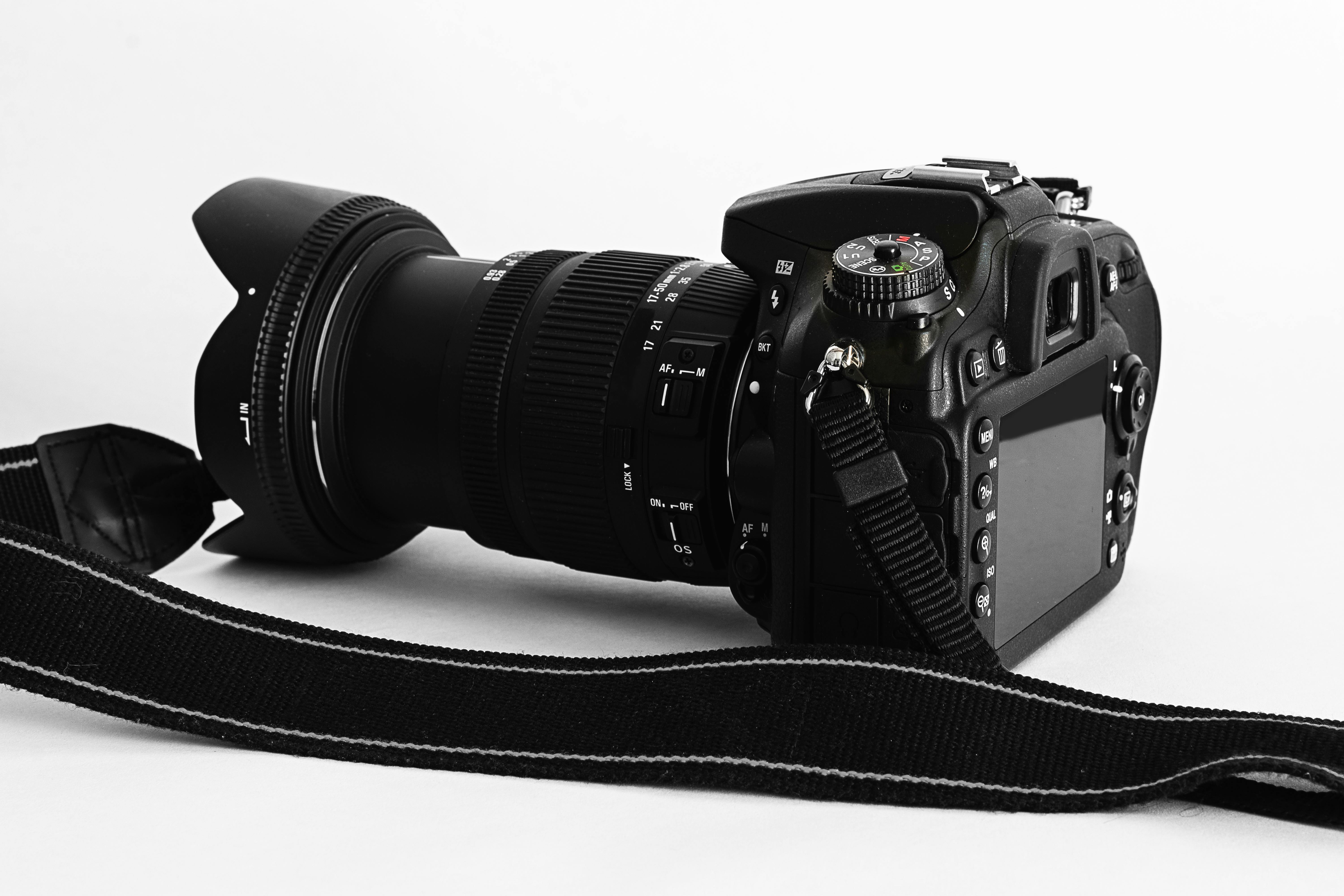
The future of video is here, and it's artifact-free. Discover how 2026's revolutionary global shutter cameras are eliminating the dreaded rolling shutter effect, supercharging AI autofocus, and transforming professional video production. We compare the top mirrorless cameras and cinema cameras featuring this cutting-edge technology, helping you choose your next camera upgrade for unparalleled cinematic quality and high-speed video performance.
Introduction to the Topic
Welcome to 2026, videostadium.com readers! If you’re still battling the infamous 'jello effect,' distorted verticals, or unsightly flash banding in your footage, then you’re officially living in the past. The year 2026 marks a pivotal moment in camera technology, where two groundbreaking advancements—global shutter sensors and sophisticated AI integration—have converged to redefine what’s possible for filmmakers, content creators, and professional videographers alike. This isn't just an incremental upgrade; it's a paradigm shift that promises pristine, artifact-free motion, unparalleled focusing precision, and a new era of creative freedom. Forget everything you thought you knew about high-speed action, VFX plates, or even simple panning shots. The era of compromise is over, and the future of flawless video is here. But with so many new models hitting the market, how do you navigate this exciting landscape and pick the best global shutter camera for your needs? We’re here to break it down, compare the frontrunners, and guide your next essential gear investment.
Backgrounds & Facts
For decades, the Achilles' heel of digital cameras, particularly those designed for video, has been the rolling shutter. This sensor technology captures an image by scanning the scene line by line, from top to bottom. While efficient and cost-effective, it introduces a host of undesirable artifacts when motion is involved: the 'jello effect' for fast pans, skewing verticals, and distracting flash banding when shooting under strobe lights. These issues have plagued action sports shooters, VFX artists needing clean plates, and anyone striving for professional, undistorted motion.
Enter the global shutter. Unlike its rolling counterpart, a global shutter sensor exposes and reads every pixel simultaneously, capturing the entire frame at a single instant. The result? Absolutely no motion artifacts. Perfectly straight lines, crisp fast-moving objects, and seamless integration with external strobes or LED walls in virtual production environments. While global shutters have long been a staple in high-end industrial and specialized cinema cameras (like those from Blackmagic Design or RED), the challenge has always been miniaturizing the technology, improving dynamic range, and reducing costs for the prosumer and professional mirrorless market.
2026 is the year this barrier has been decisively broken. Manufacturers have refined sensor designs, making global shutter technology more accessible, affordable, and performant than ever before. But the revolution doesn't stop there. Hand-in-hand with this hardware leap is the exponential growth of on-board AI processing. Modern cameras are no longer just capturing light; they're intelligently interpreting the scene in real-time. Advanced AI algorithms now power:
- Predictive Autofocus: Tracking subjects with uncanny accuracy, even in chaotic scenes, anticipating movement before it happens.
- Smart Exposure & White Balance: Adapting to complex lighting conditions faster and more accurately than ever.
- Computational Video Features: In-camera stabilization that rivals gimbals, enhanced dynamic range, and even intelligent noise reduction that preserves detail.
- Object Recognition: Identifying and locking onto specific subjects (humans, animals, vehicles) with unprecedented reliability.
This powerful synergy of global shutter for pristine image capture and AI for intelligent scene analysis and automation makes 2026 the definitive year to upgrade your camera system. Creators are demanding tools that eliminate technical hurdles and allow them to focus purely on storytelling, and these new cameras deliver exactly that.
Expert Opinion / Analysis
We sat down with renowned cinematographer and virtual production specialist, Dr. Elena Petrova, to get her take on these transformative technologies. “For years, the global shutter was a holy grail for motion picture. The moment you introduce any kind of screen—be it a TV monitor on set or a massive LED volume for virtual production—rolling shutter artifacts become an immediate nightmare. Now, with cameras like the new 'Sony Alpha 9 III GS' or the 'Canon EOS R1 Pro,' we can shoot directly into LED walls without a single scan line or flicker. It's not just about convenience; it’s about opening up entirely new creative avenues,” Petrova explains.
She emphasizes the impact on high-speed and action cinematography. “Think about extreme sports, fast-moving vehicles, or even subtle camera movements in a drama. With a global shutter, every frame is a true snapshot in time. This eliminates hours of post-production cleanup for VFX artists who no longer have to warp distorted elements back into shape. For documentary filmmakers, spontaneous moments are captured with absolute fidelity, regardless of how fast the subject or camera moves.”
Regarding AI, Petrova notes, “The AI isn't just an autofocus assistant anymore; it’s a co-pilot. The new generation of AI-powered tracking systems, like those in the 'Nikon Z9 Mark II' or the 'Panasonic GH7 Pro,' can differentiate between a subject’s face and the background, anticipate their trajectory, and maintain tack-sharp focus even if they briefly leave the frame. This empowers smaller crews and even solo creators to achieve results that previously required dedicated focus pullers and extensive practice.”
While acknowledging the initial higher cost and potential (though rapidly diminishing) trade-offs in low-light performance or dynamic range compared to the most advanced rolling shutter sensors, Petrova believes the benefits far outweigh these considerations for most professional applications. “The technology is maturing at an incredible pace. What we’re seeing now is just the beginning. The convergence of hardware precision and software intelligence is making cameras more intuitive, more reliable, and ultimately, more creatively liberating.”
💰 Best Options in Comparison (VERY IMPORTANT)
As 2026 unfolds, several manufacturers have stepped up to deliver truly revolutionary global shutter cameras with integrated AI. Here’s a look at the top contenders that are defining the new standard:
- Sony Alpha 9 III GS (A9 III Global Shutter Edition): Building on Sony's legacy of speed and autofocus, the A9 III GS integrates a full-frame global shutter sensor with their industry-leading AI processing unit. Expect unmatched 8K video up to 60fps, 4K up to 120fps, and a robust AI Real-time Tracking AF that locks onto subjects with psychic precision. Ideal for sports, documentary, and high-end event videography.
- Canon EOS R1 Pro: Canon's long-anticipated flagship finally arrives with a groundbreaking global shutter APS-C sensor optimized for both speed and resolution. The R1 Pro excels in virtual production and VFX environments, offering 6K RAW internal recording and a new 'Neural Focus' AI system that learns and adapts to your shooting style. Its compact form factor makes it a favorite for gimbal work and run-and-gun cinema.
- Nikon Z9 Mark II: Nikon doubles down on its professional mirrorless offering with the Z9 Mark II, featuring a stacked global shutter full-frame sensor. Its improved AI-driven 3D Tracking AF is legendary for its tenacity, combined with internal 8K N-RAW and ProRes RAW HQ recording. A true workhorse for wildlife, action, and cinematic productions demanding uncompromising reliability.
- Blackmagic Pocket Cinema Camera 6K GS: Blackmagic continues its tradition of affordable cinema powerhouses with the 6K GS. This Super 35mm global shutter camera offers stunning ProRes and Blackmagic RAW recording, an intuitive OS, and a robust build. While its AI features are more focused on intelligent exposure and color science than advanced tracking, its pure global shutter video quality at its price point is unbeatable for independent filmmakers and studio B-cam work.
Here’s a detailed comparison to help you make an informed decision:
| Feature | Sony Alpha 9 III GS | Canon EOS R1 Pro | Nikon Z9 Mark II | Blackmagic Pocket 6K GS |
|---|---|---|---|---|
| Sensor Size | Full-Frame Global Shutter | APS-C Global Shutter | Full-Frame Global Shutter | Super 35mm Global Shutter |
| Max Video Resolution | 8K 60p, 4K 120p | 6K RAW 60p | 8K 60p, 4K 120p | 6K 60p |
| Internal Codecs | XAVC HS/S, ProRes RAW (ext.) | 6K RAW, ProRes | N-RAW, ProRes RAW HQ | Blackmagic RAW, ProRes |
| AI Focus System | Real-time Tracking AF (Human/Animal/Vehicle) | Neural Focus (Adaptive Learning) | 3D Tracking AF (Advanced Subject Recognition) | Intelligent Scene Analysis |
| Key Features | High FPS stills, superior low-light, IBIS | Compact, virtual production optimized, excellent color science | Robust build, exceptional battery life, internal RAW | Affordable cinema quality, dual native ISO |
| Approx. Price (Body Only) | $6,999 | $5,499 | $6,499 | $2,995 |
| Target User | Pro Videographers, Sports, Documentary | Cinema, Virtual Production, Hybrid Shooters | Wildlife, Action, Cinematic Productions | Independent Filmmakers, B-Cam, Budget Cinema |
Outlook & Trends
The convergence of global shutter and AI is not merely a passing trend; it’s the foundation for the next decade of imaging technology. Looking beyond 2026, we anticipate even more sophisticated AI integration. Imagine cameras with predictive scene analysis that not only tracks subjects but also anticipates lighting changes, automatically adjusting exposure and color to maintain a consistent look across an entire scene. Generative AI could even play a role, assisting with in-camera object removal or background extensions in real-time for virtual production.
Global shutter technology itself will continue to evolve. We'll see smaller, more power-efficient sensors, pushing global shutter into more compact devices like high-end action cameras and even professional drones. The current trade-offs in dynamic range and low-light performance are rapidly being mitigated through advancements in sensor design and computational imaging techniques. Expect to see cameras that combine the best of both worlds: the absolute motion fidelity of a global shutter with the exceptional low-light capabilities previously reserved for rolling shutter sensors.
Furthermore, the implications for augmented reality (AR) and virtual reality (VR) content creation are enormous. Cameras that capture a true, undistorted snapshot of reality are essential for seamlessly blending real and virtual elements. As these immersive technologies become more prevalent, global shutter cameras will be indispensable tools for creators building the future of digital experiences.
Conclusion
2026 is undoubtedly the year of the global shutter and AI-powered camera. The days of wrestling with motion artifacts, struggling with unreliable autofocus, or compromising on your creative vision are swiftly becoming a distant memory. Whether you're a seasoned cinematographer, a burgeoning YouTube star, or a dedicated documentarian, upgrading to a camera equipped with these cutting-edge technologies isn't just about keeping up; it's about unlocking a new level of professionalism, efficiency, and creative potential. The options highlighted above represent the pinnacle of current camera engineering, each offering unique strengths for different creative pursuits. Don't let your gear hold you back any longer. Invest in the future of video production today, and experience the unparalleled clarity and intelligence that 2026's cameras bring to every frame. Your audience, and your sanity, will thank you.