
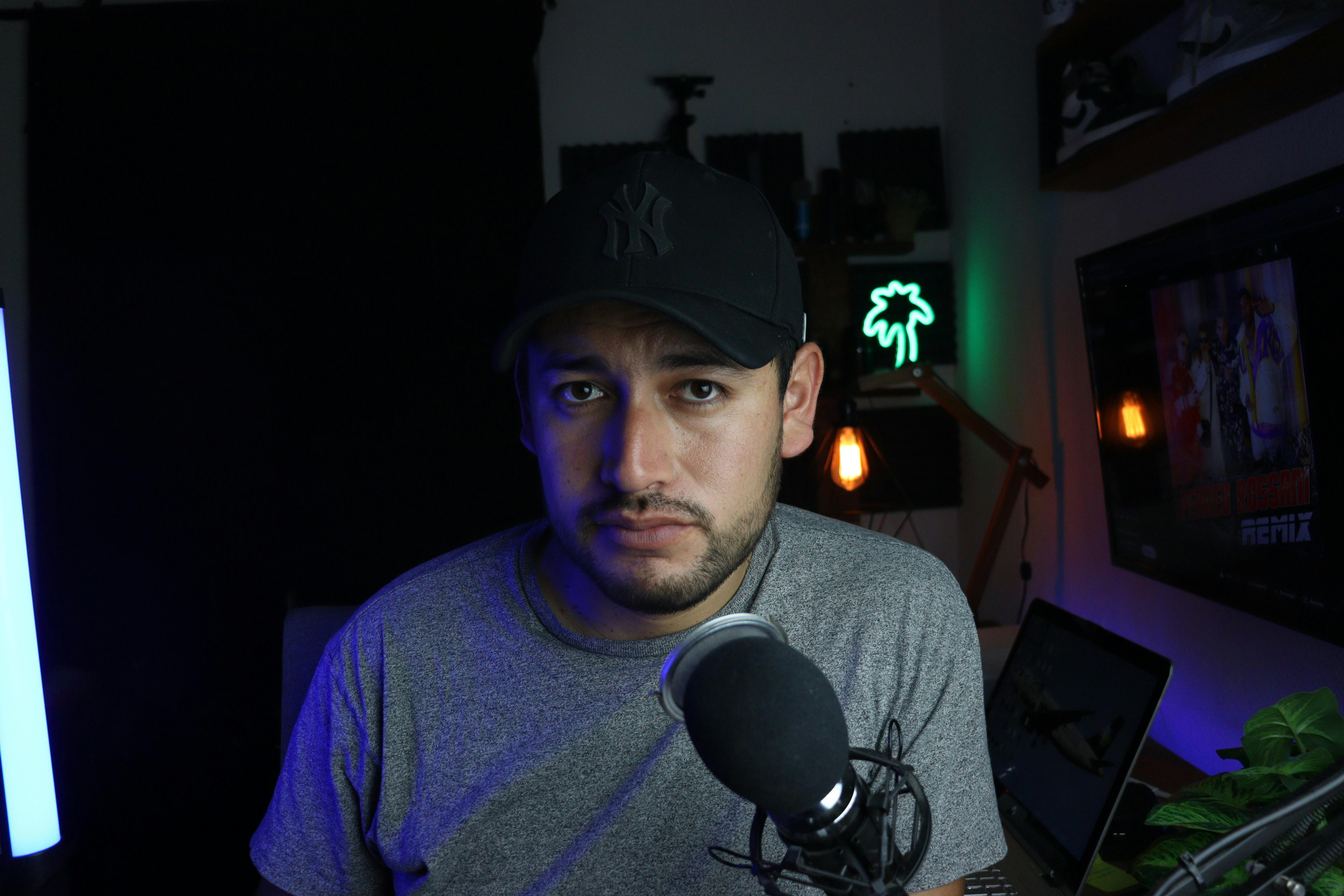
Audio is half the experience. It is said constantly, agreed with universally, and acted on almost never, because it is an abstract claim and cameras are exciting.
Here is a demonstration that makes it concrete. It takes about ten minutes and it has changed several people's spending priorities in front of me.
The test
Record the same thirty seconds of someone talking, four ways.
Good picture, good sound. A decently exposed shot with a microphone close to the speaker.
Good picture, bad sound. The same shot, using the camera's built-in microphone from across the room.
Bad picture, good sound. Deliberately underexpose, or shoot on a phone in poor light, with the good microphone.
Bad picture, bad sound, for completeness.
Then show all four to someone who has not seen them and ask which are watchable.
What happens
Every time I have done this, the ranking is the same. Good sound with bad picture is judged watchable. Bad sound with good picture is not.
People describe the bad-sound version as amateur, cheap, or unprofessional. They describe the bad-picture version as moody, or low-light, or stylistic.
They are wrong about the intent in both cases, which is the point. Poor image reads as a choice. Poor audio reads as incompetence.
Why the asymmetry exists
I have theories and none of them are settled, but a few things seem to contribute.
Speech intelligibility is not optional. If the audience has to work to understand words, they are spending attention on decoding rather than on content, and that is exhausting within about a minute.
Room reflections carry spatial information the brain processes automatically. Distant, reverberant audio tells the listener they are far away from the speaker, which is at odds with a close-up image and produces a low-level wrongness.
And there is a century of visual convention that has legitimised almost every image quality as an aesthetic. Grain, softness, low light, high contrast, degraded formats — all have been used deliberately. There is no comparable tradition of deliberately bad dialogue recording.
What actually fixes it, in order
Distance first, and this costs nothing. A microphone at thirty centimetres from a mouth sounds dramatically better than the same microphone at two metres, because the ratio of direct sound to room reflection collapses with distance.
Most bad audio is not a microphone problem. It is a distance problem.
Then the room. A space with soft furnishings, curtains, carpet, books, is easier than a hard empty room. If you cannot change rooms, you can hang a duvet on a wall behind the camera, which looks ridiculous and works.
Then the microphone itself, and here the returns diminish fast. An inexpensive lavalier microphone close to a speaker in a reasonable room will beat an expensive shotgun microphone badly placed in a hard room. The gap between a modest microphone and an expensive one, both used well, is much smaller than the gap between good and bad placement.
Then levels. Recording too quietly and lifting in post brings up noise. Recording too loudly clips and cannot be repaired. Aim for peaks with headroom and check them during the take rather than after.
The specific mistake nearly everyone makes
Using the camera's microphone because the audio "sounds fine" when monitored on headphones plugged into the camera.
It does sound fine, relatively, because you are listening to it in isolation. It sounds bad in the finished piece where it is compared against every other piece of audio the viewer has heard that day.
Camera microphones are placed at the camera, which is where nobody is speaking, and they are omnidirectional enough to pick up the room, the camera's own handling, and whatever is behind you.
They exist for reference audio to sync against, which is what they are good at.
The cheapest meaningful upgrade
If someone has nothing and asks what to buy, the answer for talking-to-camera work is a wired lavalier microphone and a small recorder, or a lavalier that plugs into a phone.
It is a small amount of money. It puts the capsule close to the mouth, which solves the distance problem, which is most of the problem.
For anything with more than one person or with movement, a shotgun on a boom is the right tool and requires someone to hold it, which is the real cost.
The part that is genuinely hard
Noise you cannot control. Traffic, aircraft, ventilation, neighbours, building work.
There is no equipment fix for this. Closer microphone placement helps because it improves the ratio, but a constant background does not go away.
What works is scheduling — shooting at times when the noise is lower — and location choice, and occasionally just waiting. It is unglamorous and it is more effective than anything you can buy.
Which is generally the shape of audio work. Most of it is decisions rather than purchases, which is probably why it gets less attention than gear that has a specification sheet.